mesacc.edu > Academics > Cultural Science

Cultural Science

Cultural Science

On behalf of the Cultural Science department, we would like to welcome you to another exciting year at Mesa Community College. This web site is designed to give you an overview of the programs and courses offered within our department and to keep you updated on noteworthy news.


African American StudiesAfrican American Studies

Western Civilization has been a reliable means to understand world cultures for many generations, but the rapidly changing demography of the United States requires a more profound awareness of cultural resources by thinkers of color. African American Studies encourages students to test traditional assumptions about race in order to make more enlightened choices for themselves and their civilization.
American Indian StudiesAmerican Indian Studies

American Indian Studies seeks to develop a strong understanding of the languages, cultures, and sovereignty of American Indians/Alaska Natives, which honors our ancestors and their wisdom. American Indian Studies encourages students to explore issues from American Indian perspectives which place the land, its history and the people at the center.
AnthropologyAnthropology

Anthropology is about you – who you are as a participant in a culture, where you can trace your origins, and how you fit into nature.  It is the story of what we humans share in the ways we behave and the ways we have come to play such a major role in the world.  It is about what we can learn about ourselves.  It about what it means to be human in a cultural, biological and historical perspective.
Chicana/Chicano StudiesChicana/Chicano Studies

Mesa Community College’s Chicana/o Studies Program promotes a critical understanding of the roles of Chicanas/os in the history, culture, and politics of the United States.  Critical thinking, writing, and verbal communication skills are focuses of the field of Chicana/o Studies.  These skills and the greater understanding of Chicana/o culture provide a strong foundation for students interested in pursuing careers in education, law, social welfare, the arts and humanities, the social sciences, and public health.  The program emphasizes interdisciplinary scholarship, cultural affirmation, social justice, community leadership, and academic excellence.

GeographyGeography

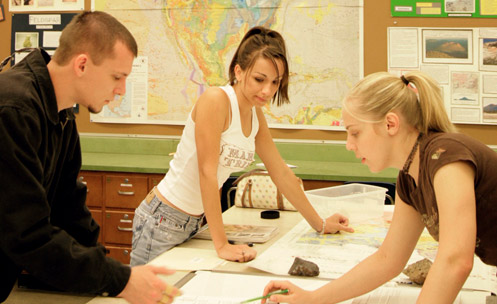
Physical Geography is the study of the land. Geography has a history of being about place names. Come dispel this myth in Physical Geography. In this class we explore the Physical landscape of Earth. From it's fiery origins through earthquakes and massive volcanoes to the atmosphere and weather conditions. We also look at the processes which have shaped the earth throughout its' history to the way we see it today.

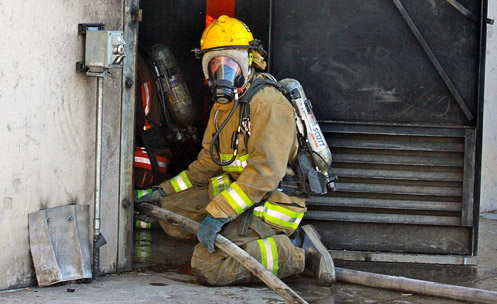
Cultural Geography also known as human geography, covers a wide swath of human interaction with the land. Cultural geography includes language, religion, medicine, cities, economics, entertainment, and much more. The demographic transition model seeks to explain the transformation of countries from having high birth and death rates to low birth and death rates. In developed countries this transition began in the eighteenth century and continues today. Less developed countries began the transition later and are still in the midst of earlier stages of the model.

Social WorkGeographic Information Systems

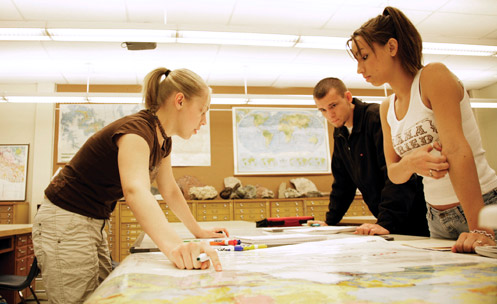
Geospatial Technologies is the term used to describe Geographic Information Systems (GIS), Geographic Positioning System (GPS), and Remote Sensing technologies. These technologies are applied in a variety of settings by many different users including: Civil Engineering (CH2M Hill, HDR), Urban Planning (City of Phoenix, City of Chandler, City of Mesa), Natural Resource Management (Az Fish & Game, National Park Service, BLM), archeologists, biologists, and geologists. These programs are built on a solid foundation in geospatial concepts, as opposed to training in the associated software only. Students are equipped with fundamental spatial analysis concepts and skills that can be applied in a variety of public and private work environments where spatial data analysis is required.

Sociology Global Citizenship

The certificate in Global Citizenship is an interdisciplinary program intended to assist students in understanding the interconnectedness of peoples and societies, developing a general knowledge of history and world events, accept the existence of different cultural values and attitudes, and celebrate the richness of human diversity. It enhances student's understanding of the world around them and current social issues such as economic and social justice, human and civil rights, world and regional conflicts, environmental degradation, cultural diversity, and political change.

SociologySociology

Sociology offers a unique perspective of the world. It uncovers explanations for 'why people do what they do.' Much like a marketing director seeks to understand why different groups of people purchase certain products, sociologists are driven to uncover the hidden social fabric of our everyday lives. Sociology examines issues of race, gender, age, occupation, religion, family, and all other characteristics of human beings. There's no limit to human collective behavior that can't be studied by sociology students and researchers. How well do you know people? Sociologist Ralph Linton stated that the last thing a fish would notice would be water. Come find out what you've been missing in the world around you!

Social WorkSocial Work

Social work is a profession that strives to enhance the social functioning of all people and promotes the development of environmental conditions that will help people achieve their maximum potential.

Womens StudiesWomen's Studies

Women's Studies, an intensive interdisciplinary liberal arts program, provides students with the tools and opportunities to discuss and critique the historical and contemporary theories and practices of feminism(s). Students take a variety of courses focusing on women's experiences and perspectives, exploring topics such as history, culture, class, race, ethnicity, sexuality, and gender in order to help bring about equality, understanding, and peace.

Department Website:

Home page: www.mesacc.edu/dept/d10/
Faculty List: www.mesacc.edu/dept/d10/faculty.html

Hours & Location:

Building SC/58 map

Spring & Fall
Monday - Thursday: 8 a.m. to 8 p.m.
Friday: 8 a.m. to 5 p.m.

Summer
Monday - Thursday: 8 a.m. to 5 p.m.
CLOSED FRIDAY

Contact:

Department Phone:480-461-7060

Mona Scott
Interim Department Chair

Office: SC-73
Phone: 480-461-7064
Email: mscott@mesacc.edu

Mary Schwenck
Administrative Assistant

Office: SC14
Phone: 480-461-7348
Email: mschwenck@mesacc.edu

Paul Harasha
Department Chair
(Red Mountain)
Phone: 480-654-7729
Email: paul.harasha@mcmail.maricopa.edu

Sue Blackwell
Administrative Secretary
(Red Mountain)
Office: PV 214
Phone: 480-654-7734
Email: Sue.Blackwell@mcmail.maricopa.edu

Lisa Smith
Instructional Support Services
(Red Mountain)
Office: PV 214
Phone: 480-654-7808
Email: Lisa.Beth.Smith@mcmail.maricopa.edu

Please contact Cultural Science for comments or corrections email phone: 480-461-7060