
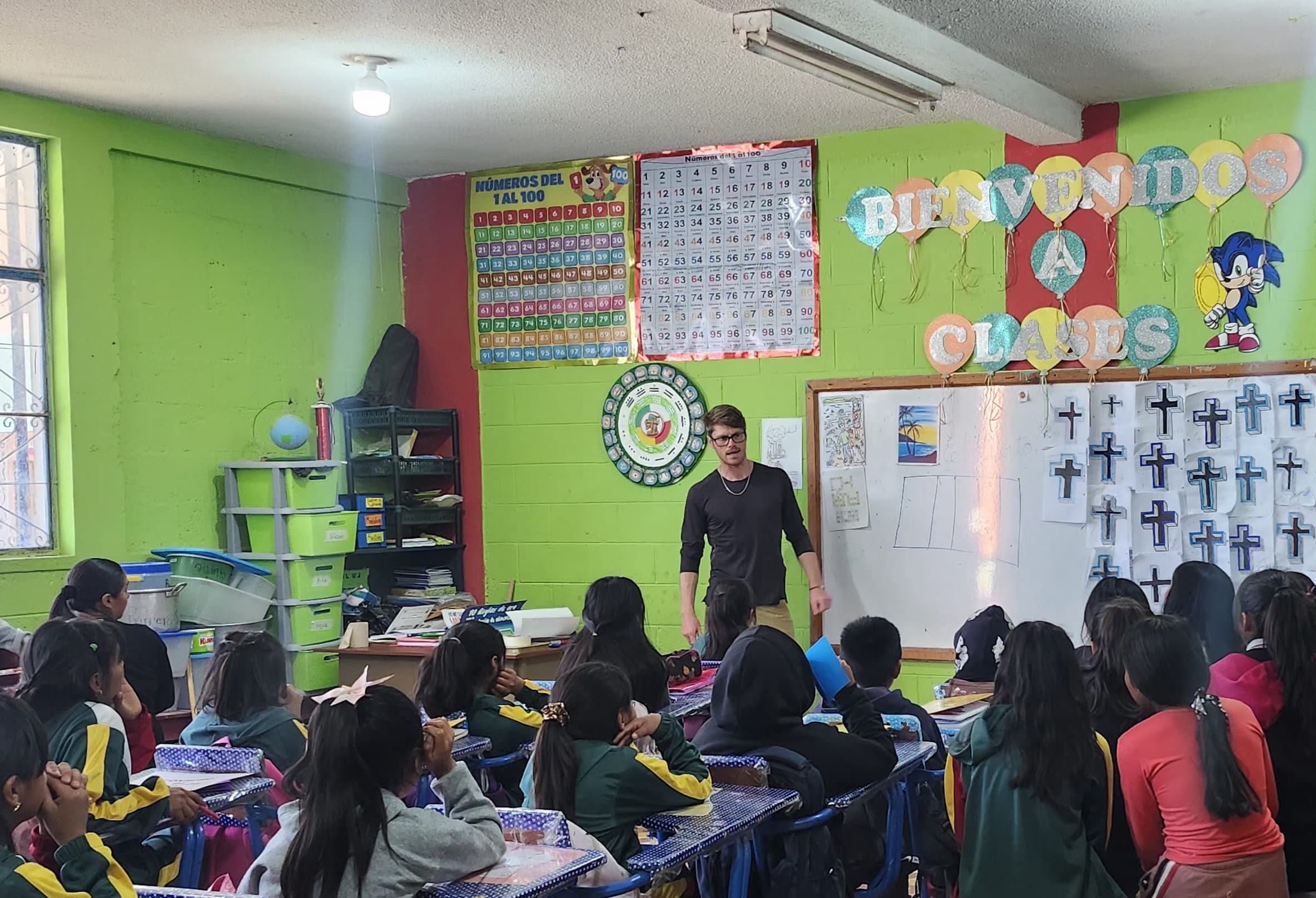
As a U.S. Air Force veteran and current Peace Corps agriculture volunteer in Guatemala, Mesa Community College (MCC) alumnus Riley Anderson has built his life around service to others.
After completing his time in the Air Force, Riley earned an Associate in Applied Science in Network and Systems Administration from MCC in 2023. He also recently completed an eight-week Java programming course, which he attended remotely from Guatemala.
“I enjoyed a lot of success at MCC, and I hope to attend a university after I complete my Peace Corps service,” Anderson said. “For that reason, I wanted to continue my studies in some form while abroad.”
Anderson initially learned about the Peace Corps after meeting a fellow veteran who was a volunteer in Ghana. He applied a few years after learning about the program and is now more than halfway into his two-year tenure.
“I wouldn't trade this for anything,” Anderson said. “This is an experience that sets someone apart, whether it be with a university or job application, or just life in general. Peace Corps volunteers are critical thinkers and highly motivated. The dynamic nature of the job requires us to be.” 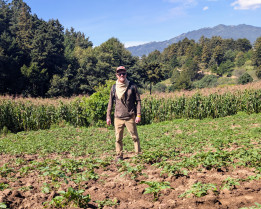
In his current role, Anderson works with members of the Guatemalan government to address food insecurity in rural communities of the western highlands – a region that serves as the cultural heart of the Mayan world. This requires a deeper understanding of the socioeconomic and agricultural obstacles facing the Mayan people.
“History has not been kind to Mayan communities,” Anderson said. “A side effect of the Peace Corps is that you will be exposed to difficult truths. We have problems in the United States, but the scale shifts out here.”
When asked about other challenges, Anderson relayed that volunteers commonly experience gastrointestinal issues at some point during their service. “Plan on being sick,” Anderson said. “Unfortunately, for a variety of reasons, it is easier to fall ill. My stomach has been through a lot.”
However, Anderson reiterated that the pros far outweigh the cons. He now possesses a high level of the Spanish language which has aided in fostering close relationships with members of his community.
“When I arrived, my Spanish level was the lowest out of my cohort. It was terrible,” Anderson said. “The Peace Corps provides 10 weeks of training that covers a variety of topics. I had to reach the language benchmark by week 10, otherwise I was getting sent home. MCC gave me the tools required to succeed in demanding academic environments. In this case it was language acquisition in a constrained period of time. If you’re interested in learning a language, the Peace Corps is a great way to do it.”
For Anderson, the experience has been transformative. The opportunity has helped broaden his perspective and led him to develop skills that will stay with him for life.
“I would say go to the website and apply,” said Anderson. “You never know where service will take you. Peace Corps volunteers are multicultural, problem solvers and critical thinkers. In this diverse world, that’s huge.”