Field of Interest

Launch a creative career doing what you love.
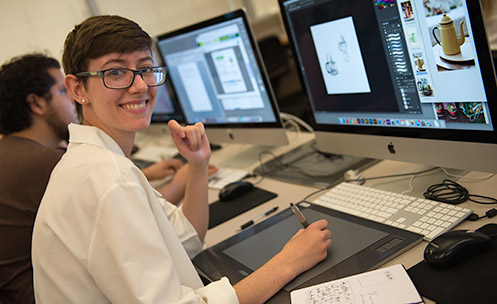
Learn the artistic, technical, and business side of photography. Our program can prepare you for a variety of professional positions, including freelance work and photo editing, in addition to further studies.
The Right Pathway for You
MCC offers options for your future. Your interests and goals will guide you in selecting the pathway for you to realize your dreams.
Associate Degree
MCC’s associate degrees enhance your resume and prepare you to enter the workforce with an advantage. Whether you are interested in simply completing basic, required college courses or specializing in a specific area, there’s a degree for you.
A list of available associate degrees offered in the Photography program
| Name |
Type |
Title |
Courses |
|
Associate in Applied Science |
AAS |
Photography |
Pathway Map |
Career Opportunities
Successful completion of a degree within the Photography program may lead to employment in a variety of different occupations and industries. Below are examples of related occupations with associated Maricopa County-based annual median wages*. Some occupations may require additional education or training. You can click on any occupation to view more detail regarding education level, wages, and employment information.
Create original artwork using any of a wide variety of media and techniques.
Typical Education Level
some college
Hourly Median Wage
$11.17
Annual Median Wage
$23,237
Number of People Employed
901
4-Year Employment Growth
Increase by 11.2%
Photograph people, landscapes, merchandise, or other subjects. May use lighting equipment to enhance a subject's appearance. May use editing software to produce finished images and prints. Includes commercial and industrial photographers, scientific photographers, and photojournalists.
Typical Education Level
a high school diploma or less
Hourly Median Wage
$21.61
Annual Median Wage
$44,967
Number of People Employed
2,706
4-Year Employment Growth
Increase by 5.1%
Perform work involved in developing and processing photographic images from film or digital media. May perform precision tasks such as editing photographic negatives and prints.
Typical Education Level
a high school diploma or less
Hourly Median Wage
$23.96
Annual Median Wage
$49,847
Number of People Employed
43
4-Year Employment Growth
Increase by 14.0%
Teach courses in drama, music, and the arts including fine and applied art, such as painting and sculpture, or design and crafts. Includes both teachers primarily engaged in teaching and those who do a combination of teaching and research.
Typical Education Level
a Master's or Professional degree
Hourly Median Wage
$37.29
Annual Median Wage
$77,583
Annual Job Openings
2,443
Number of People Employed
23,583
4-Year Employment Growth
Increase by 11.3%
Teach or instruct individuals or groups for the primary purpose of self-enrichment or recreation, rather than for an occupational objective, educational attainment, competition, or fitness.
Typical Education Level
a Master's or Professional degree
Hourly Median Wage
$21.46
Annual Median Wage
$44,648
Number of People Employed
3,574
4-Year Employment Growth
Increase by 13.5%
* Career and wage information provided by Lightcast using data, reports, and forecasts which are generated using government data sources and Lightcast’s proprietary analytical processes. Lightcast’s data covers multiple classes of workers including QCEW, non-QCEW, and those who are self-employed. Disclaimer
Request Information
There’s a Better Way to Do College
We offer more value, opportunity, and support for our students. Connect with us to get information about all of our Photography offerings, including resources, scholarships, and related programs.