
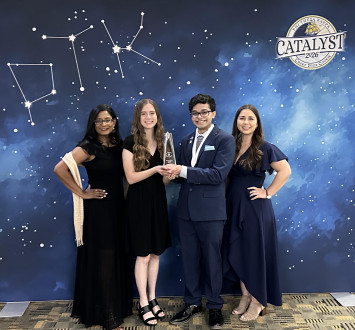
MESA, Ariz. – Nov. 16, 2026 – Omicron Beta, the Phi Theta Kappa (PTK) Honor Society chapter at Mesa Community College (MCC), is featured in the sixth edition of Change Makers: Phi Theta Kappa Journal of Student Leadership, for its revival of an impactful recycling program on campus that not only supports sustainability but creates student scholarship opportunities.
Published annually by PTK, Change Makers is the first national journal to recognize outstanding student-led leadership initiatives at community colleges, highlighting college projects–developed in collaboration with college administrators–that demonstrate student leadership, campus collaboration and meaningful community impact. Projects must align with each institution’s strategic priorities and are supported by the broader campus community.
The 2026 edition features 16 projects selected from more than 450 chapter submissions across PTK’s global membership. Omicron Beta’s project, “From Awareness to Action: Reviving Recycling at MCC,” raises awareness of the impact of proper recycling, encourages sustainable habits and strengthens community engagement.
“I believe this recognition is incredibly meaningful for our students because it affirms that their hard work, dedication and commitment to service truly matter,” said PTK Omicron Beta Chapter Advisor Puvana Ganesan, Ph.D. “It gives them an opportunity to see that their voices, ideas and actions can make a real difference, not only at MCC but also in the communities we serve. I hope it inspires them to continue growing as leaders and changemakers.”
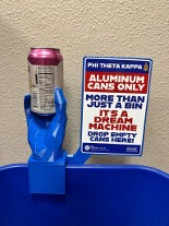
Chapter members selected recycling as their project after discovering that changes to the city of Mesa’s recycling collection services had interrupted the recycling process, resulting in recyclable materials from campus bins being disposed of with general waste.
To better understand the issue and identify opportunities for change, Omicron Beta students partnered with MCC’s Center for Community and Civic Engagement and the MCC Sustainability Committee, a collaborative hub for both campuses aligning existing efforts and launching new initiatives in sustainability education, community partnerships and operational practices. It engages faculty, staff and students in meaningful efforts that promote environmental stewardship and institutional resilience.
Subsequently, PTK students took the lead in organizing and promoting a “Trash-ure Hunt” during Earthweek 2025 and continued supporting the project in 2026, when the MCC Sustainability Committee led the campus-wide sustainability events, including the Trash-ure Hunt.
To encourage participation and make recycling more visible across campus, the chapter introduced blue recycling bins featuring the slogan, “More Than Just a Bin, it’s a Dream Machine.” The first event brought together more than 45 students, faculty and staff, who sorted more than 700 pounds of waste to assess campus recycling practices. Findings also revealed that recyclable materials, including clean paper, cardboard and approximately 35% of aluminum cans, were being discarded as general waste.
After presenting the results to MCC President Dr. Richard Daniel and the Sustainability Committee, chapter members helped build support for a pilot aluminum recycling program, which students found would generate revenue for student scholarships and additional sustainability efforts like the launch of the new Green Student Ambassador program, connecting responsible resource use with a tangible investment in students’ educational goals.
At the 2026 Trash-ure Hunt, participants sorted nearly 40 large trash bags and found that more than half contained recyclable materials, only 12 bags contained general waste and two contained contaminated recyclables. “The findings demonstrated the importance of properly rinsing containers before recycling and emphasized the opportunity to reduce campus waste through greater recycling awareness and participation,” Ganesan explained.
She noted that Omicron Beta’s recognition in Change Makers underscores the impact students can have when they identify a need, collaborate with the campus community and pursue practical solutions.
“This recognition also reflects MCC’s commitment to student success, leadership and community engagement,” she continued. “We are proud of our students for turning their education into meaningful action that not only enriches their own lives but also makes a lasting difference in the communities we serve.”
For additional information about MCC’s Phi Theta Kappa Omicron Beta Chapter, visit mesacc.edu/students/phi-theta-kappa.
# # #
Media contact: Dawn Zimmer, [email protected], 480-461-7892
Mesa Community College (MCC) is nationally recognized for its excellence in university transfer, career and technical programs, civic engagement, and innovative education. Serving more than 25,500 students annually, MCC offers a range of degree and certificate programs across its two campuses and additional locations. MCC students contribute more than 8,500 hours of community service annually. MCC serves as a key resource for education, workforce development, and lifelong learning. The college enhances student success through Guided Pathways with Integrated Support Services. A Hispanic Serving Institution, nearly 50% of MCC students are first-generation college attendees, and it boasts the largest Indigenous student population among Maricopa County Community College District (MCCCD) colleges, supporting students from 22 Arizona tribes and additional out-of-state tribes. Our award-winning faculty are committed to helping students achieve their goals through high-quality education, training and undergraduate research opportunities. Located in the East Valley of Phoenix, Arizona, MCC is one of 10 MCCCD colleges. Learn more at mesacc.edu/newsroom.
MCC is accredited by the Higher Learning Commission (HLC), hlcommission.org.
The Maricopa County Community College District (MCCCD) is an EEO institution and an equal opportunity employer of protected veterans and individuals with disabilities. All qualified applicants will receive consideration for employment without regard to race, color, religion, sex, sexual orientation, gender identity, age, or national origin. A lack of English language skills will not be a barrier to admission and participation in the career and technical education programs of the District. MCCCD does not discriminate on the basis of race, color, national origin, sex, disability or age in its programs or activities. For Title IX/504 concerns, call the following number to reach the appointed coordinator: (480) 731-8499. For additional information, as well as a listing of all coordinators within the Maricopa College system, visit www.maricopa.edu/non-discrimination.