
MESA, Ariz. – Sept. 24, 2026 – Mesa Community College (MCC) will host a Mesa Public Schools Governing Board candidate forum at 5:30 p.m. Wednesday, Sept. 30, in the Navajo Room at MCC’s Southern and Dobson Campus, 1833 W. Southern Ave., Mesa. The event is free and open to the public and will be livestreamed at mesacc.edu/live.
Hosted by MCC and sponsored by the MCC Educators Rising Club and Mesa Public Schools, the forum will give students and community members an opportunity to hear directly from candidates seeking election to the Mesa Public Schools Governing Board and learn about their perspectives on issues facing the district and public education.
Four candidates are seeking two open seats on the Governing Board: Josh Chilton, Jennifer Echols, Jason Smithson and incumbent board member Rachel Walden. The general election is Nov. 3, and the voter registration deadline is Oct. 5.
Student learning opportunity
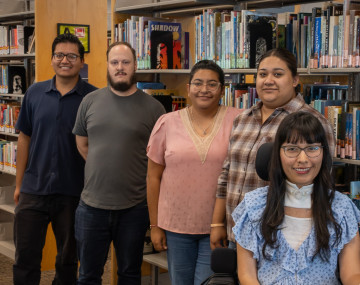
The forum provides members of MCC’s Educators Rising Club, composed of students interested in careers in education, with a chance to put civic engagement into practice while learning more about the role local governance plays in public education.
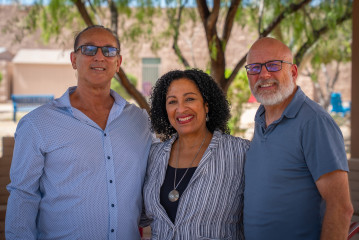
“This experience allows Educators Rising students to move beyond learning about civic engagement to actively participating in it—developing their voices, engaging education leaders and contributing to an informed community conversation,” said Tawn Hauptli, Ed.D., Educators Rising advisor and K–12 Education faculty.
The forum highlights the collaborative work of Hauptli; Eddie Webb, Ed.D., New Media Lab director and English faculty; and Brian Dille, Ph.D., Political Science faculty, who have been guiding students through a series of civic engagement experiences focused on public education and local governance.
As part of that preparation, Dille provided training to Educators Rising students who will moderate the candidate forum.
“Learning how to moderate a public forum gives students an opportunity to practice skills that are important to civic engagement, including listening carefully, asking thoughtful questions and making space for different perspectives,” Dille said. “They’re taking an active role in helping their community hear from the candidates.”
Extending classroom experience
The students’ preparation also included opportunities to learn directly from Mesa Public Schools leadership. Webb recently facilitated a podcast conversation between Educators Rising Club President Kassie Ayala Ruiz, club Senator Brendan Lange; Mesa Public Schools Superintendent Matthew Strom, Ed.D.; and Governing Board President Courtney Davis. The discussion grew out of the students’ interest in better understanding how a large public school district is governed, funded and led.
“The Educators Rising students wanted to hear directly from the people doing this work,” Webb added. “That kind of engagement gives future educators a much deeper understanding of the systems they will one day be part of.”
The podcast conversation explored fiscal stewardship, Arizona public school funding and how changing enrollment and demographic trends are influencing district facilities and planning. It also offered advice for students and future educators interested in making a difference in their schools and communities.
The podcast is available on MCC’s YouTube channel, YouTube.com/mesacc.
To learn more about civic engagement events and initiatives at MCC, visit the Center for Community & Civic Engagement on the MCC website.
# # #
Media contact: Dawn Zimmer, 480-461-7892, [email protected]
Mesa Community College (MCC) is nationally recognized for its excellence in university transfer, career and technical programs, civic engagement, and innovative education. Serving more than 23,000 students annually, MCC offers a range of degree and certificate programs across its two campuses and additional locations. MCC students contribute more than 5,677 hours of community service annually. MCC serves as a key resource for education, workforce development, and lifelong learning. The college enhances student success through Guided Pathways with Integrated Support Services. A Hispanic Serving Institution, nearly 50% of MCC students are first-generation college attendees, and it boasts the largest Indigenous student population among Maricopa County Community College District (MCCCD) colleges, supporting students from 22 Arizona tribes and additional out-of-state tribes. Our award-winning faculty are committed to helping students achieve their goals through high-quality education, training and undergraduate research opportunities. Located in the East Valley of Phoenix, Arizona, MCC is one of 10 MCCCD colleges. Learn more at mesacc.edu/newsroom.
MCC is accredited by the Higher Learning Commission (HLC), hlcommission.org.
The Maricopa County Community College District (MCCCD) is an EEO institution and an equal opportunity employer of protected veterans and individuals with disabilities. All qualified applicants will receive consideration for employment without regard to race, color, religion, sex, sexual orientation, gender identity, age, or national origin. A lack of English language skills will not be a barrier to admission and participation in the career