
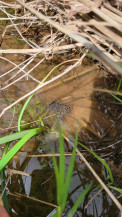
 MESA, Arizona – May 13, 2026 – Mesa Community College (MCC) continues to play a vital role in regional conservation efforts as its cienega habitat at the Red Mountain Campus supports the conservation of the Lowland Leopard Frog.
In partnership with the Salt River Project (SRP), two Lowland Leopard Frog egg masses collected from the MCC cienega were carefully translocated to a suitable habitat along Tonto Creek in April.
Led by SRP Senior Environmental Scientist Sharon Lashway, the effort required precise timing to ensure the eggs, which were less than 24 hours old, were safely transported, acclimated and released into their new habitat to support wild population recovery.
This milestone builds on more than a decade of conservation work at MCC. Since the completion of the cienega’s final phase at the Red Mountain Campus in 2015, the site has become a refuge for Arizona’s native fish and wildlife. By 2016, Lowland Leopard Frogs had been success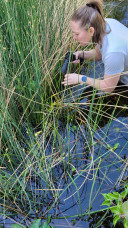 fully introduced and were breeding, and by 2020, MCC-supported conservation efforts contributed to replenishing wild populations of multiple native and endangered species, including Gila Topminnow and Desert Pupfish.
The cienega continues to thrive as both a conservation habitat and a living laboratory. This year alone, nine frog egg masses have been recorded, with daily observations ranging from four to 12 frogs and a recent night survey identifying 18 individuals. Student researchers have also played a key role in ongoing monitoring efforts, recently confirming through DNA analysis the genetic purity of MCC’s frog population — an important distinction given the threat posed by invasive species such as the Rio Grande Leopard Frog.
“The cienega represents conservation, education and hands-on research,” said MCC Life Science Chair, Liz Csikar. “Our students are not only learning about endangered ecosystems, they are actively contributing to their preservation. Participating in projects like the frog egg translocation gives them real-world experience in field biology, data collection and species management. It’s incredibly meaningful to see their work directly support the recovery of native species in Arizona.”
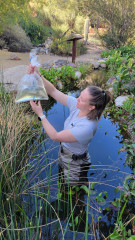 MCC’s cienega provides students and faculty with rare opportunities to study threatened habitats, conduct field research and engage in conservation practices that have a tangible environmental impact. Through partnerships with organizations like SRP and ongoing support from state agencies, the college remains committed to preserving Arizona’s native biodiversity while preparing the next generation of environmental scientists.
# # #
Media Contact: Dawn Zimmer, [email protected], 480-461-7892
Mesa Community College (MCC) is nationally recognized for its excellence in university transfer, career and technical programs, civic engagement and innovative education. Serving more than 25,500 students annually, MCC offers a range of degree and certificate programs across its two campuses and additional locations. MCC students contribute more than 8,500 hours of community service annually. MCC serves as a key resource for education, workforce development and lifelong learning. The college enhances student success through Guided Pathways with Integrated Support Services. A Hispanic Serving Institution, nearly 50% of MCC students are first-generation college attendees and it boasts the largest Indigenous student population among Maricopa County Community College District (MCCCD) colleges, supporting students from 22 Arizona tribes and additional out-of-state tribes. Our award-winning faculty are committed to helping students achieve their goals through high-quality education, training and undergraduate research opportunities. Located in the East Valley of Phoenix, Arizona, MCC is one of 10 MCCCD colleges. Learn more at mesacc.edu/newsroom.
MCC is accredited by the Higher Learning Commission (HLC), hlcommission.org.
The Maricopa County Community College District (MCCCD) is an EEO institution and an equal opportunity employer of protected veterans and individuals with disabilities. All qualified applicants will receive consideration for employment without regard to race, color, religion, sex, sexual orientation, gender identity, age or national origin. A lack of English language skills will not be a barrier to admission and participation in the career and technical education programs of the District. MCCCD does not discriminate on the basis of race, color, national origin, sex, disability or age in its programs or activities. For Title IX/504 concerns, call the following number to reach the appointed coordinator: (480) 731-8499. For additional information, as well as a listing of all coordinators within the Maricopa College system, visit www.maricopa.edu/non-discrimination.