
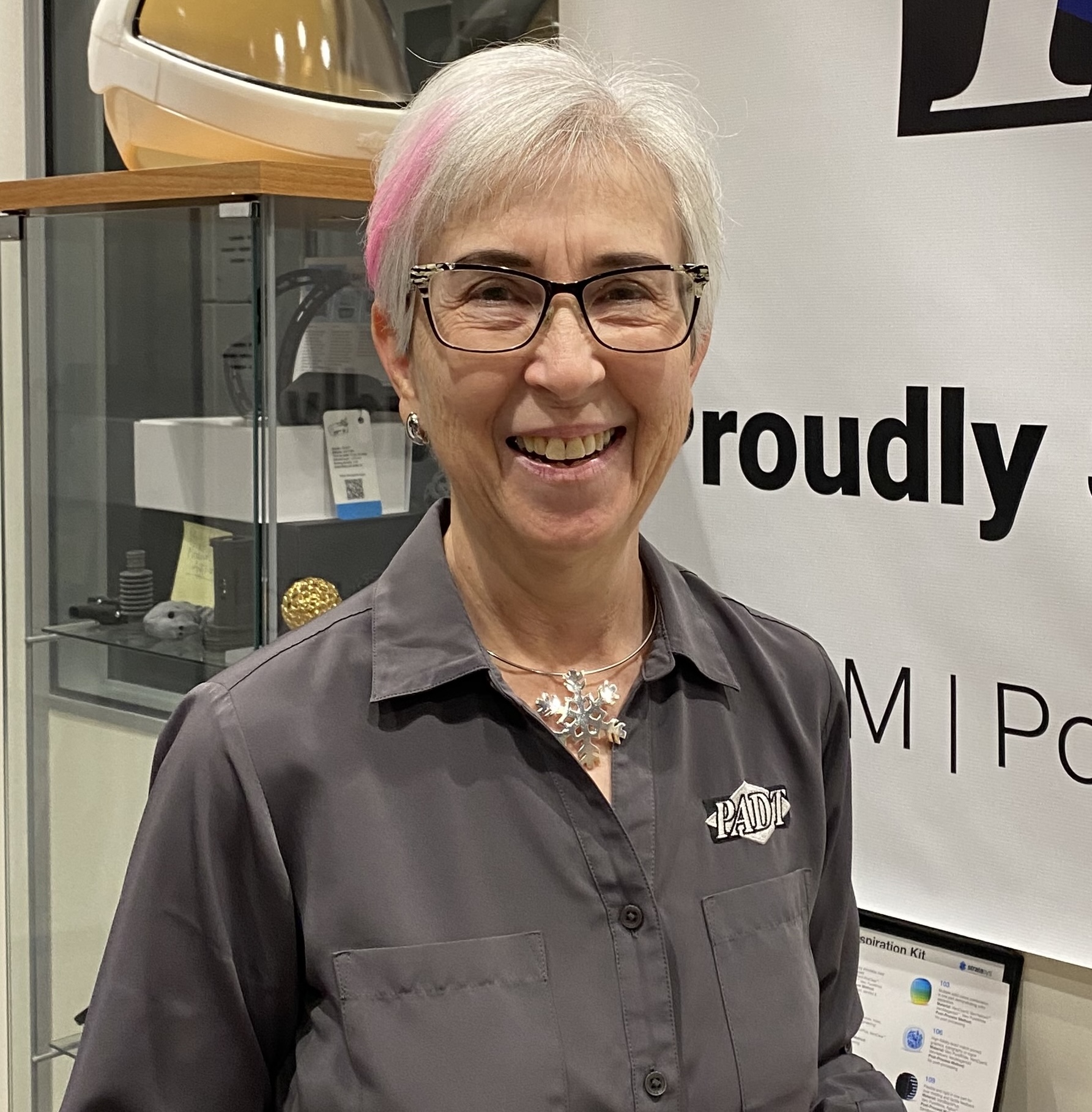
Several years ago, Pam Waterman learned about Ari Ellman, a two-year-old who had a rare, life-threatening tumor on his brain. Because of where it was positioned, the tumor initially appeared inoperable. After studying a 3D printed model of Ellman’s brain, doctors discovered an alternative surgery option, allowing them to remove the tumor successfully.
Stories such as Ellman’s are part of what drew Waterman to take classes on 3D printing at Mesa Community College (MCC). She is among three generations of female Thunderbirds, as her mother and three daughters attended MCC as well.
Waterman began her career as a microwave engineer, but shifted paths after starting a family. She read the book “What Color is Your Parachute?” which helped her transition to freelance technical writing, a career she would maintain for the next 25 years.
During her time as a writer, she became a contributing editor to Digital Engineering Magazine. In 1996, she was assigned to write about rapid prototyping – her first exposure to what is now known as 3D printing.
“I became fascinated by it,” Waterman explained. “I decided to attend MCC to take the classes I needed to shift my career. All of what I learned helped build my resume. I could not have done it without MCC.”
After working in MCC’s 3D printing lab and taking several applicable courses, she wrote a letter to PADT, a company she had interviewed during her time as a freelance writer.
“After receiving the letter, PADT invited me to their office and we talked,” Waterman said. “Within half an hour they said, ‘Our 3D printing application engineer told us he wants to move into sales, so we have an opening.’ Talk about the stars aligning! I went through several interviews, and I've been with PADT for seven years.”
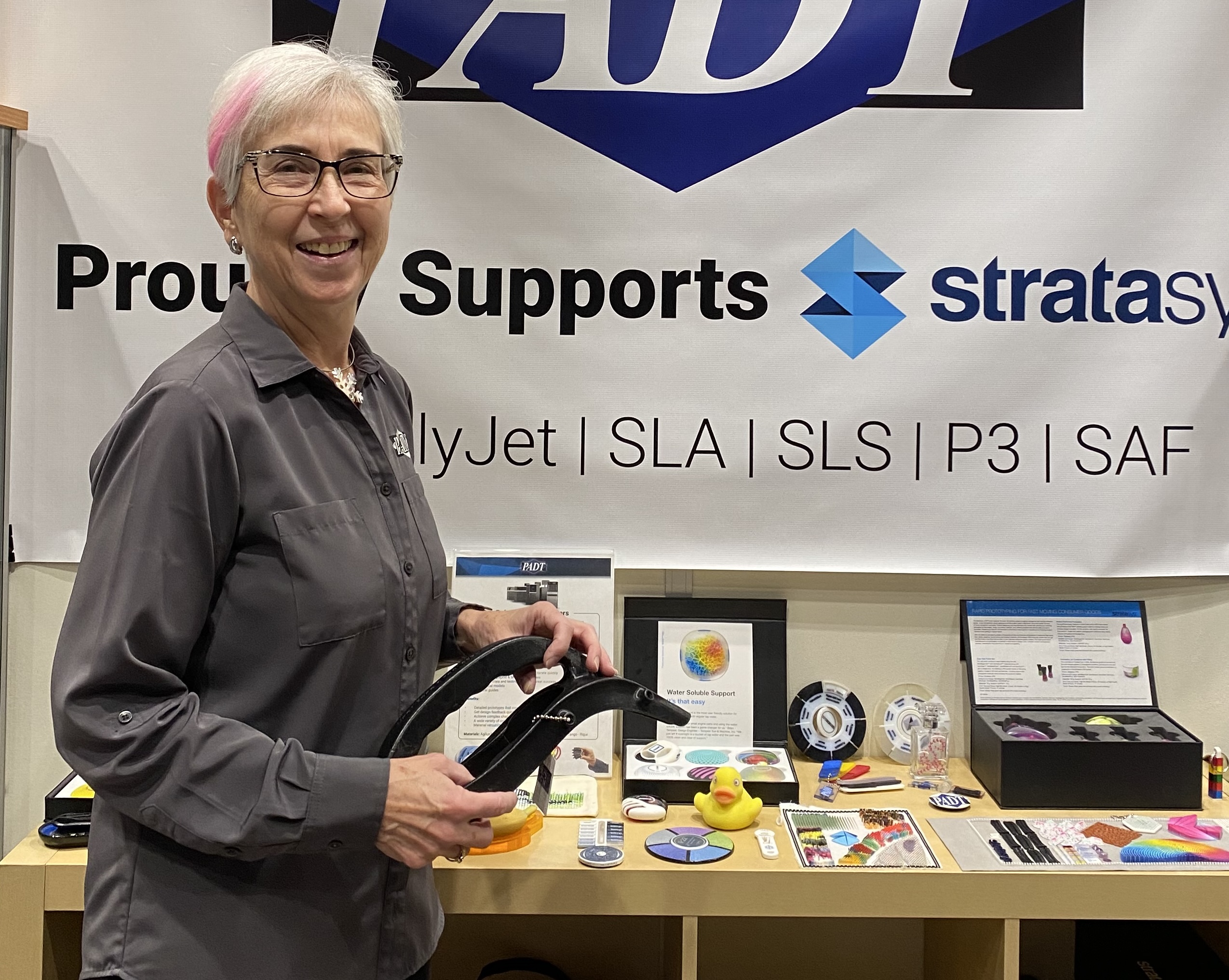
In Waterman’s role as PADT’s Senior Applications Engineer, she works with clients in aerospace, healthcare and a range of other industries. One of her favorite applications is in the medical field, where hospitals such as Phoenix Children’s Hospital use 3D-printed models to plan surgeries, train medical teams and help families understand complex procedures.
When asked about advice on how to shift careers into 3D printing or a similar industry, Waterman emphasized the importance of networking, attending events and speaking to MCC instructors.
“Our local libraries have 3D printers anybody can use for free, which is a great way to begin learning about the process,” Waterman explained. “Networking, joining professional societies and going to events are key, even if you don't think you're the classic fit for something. I find so many people are willing to chat, and the same goes with the instructors at MCC. They are all so supportive.”
Looking ahead, Waterman is especially interested in the future of sustainable 3D printing. She is invested in learning about the emerging materials made from recycled and biodegradable sources and hopes to see the industry continue moving toward environmentally responsible manufacturing.
“The thing that fascinates me right now is the sustainability side of additive manufacturing,” Waterman said. “I love the idea of composting and full cycle, cradle to grave recycling. That's the direction I want to see 3D printing go.”